


Most traders believe they are disciplined because they place trades carefully, manage risk, and review charts.
The uncomfortable truth is that many still repeat the same mistakes month after month without knowing why. A proper trading journal changes that dynamic completely.
It turns raw trade history into clear performance feedback, exposing habits, strengths, and leaks that charts alone never reveal. In 2026, trading journals are no longer optional tools for professionals.
They are decision systems. This guide breaks down the 7 best trading journals, focusing on depth, accuracy, usability, and real improvement potential rather than surface-level features.
Best Trading Journals for Serious Traders
The platforms below were selected based on analytics depth, trade tracking accuracy, usability, and long-term performance value.
1. TradeZella
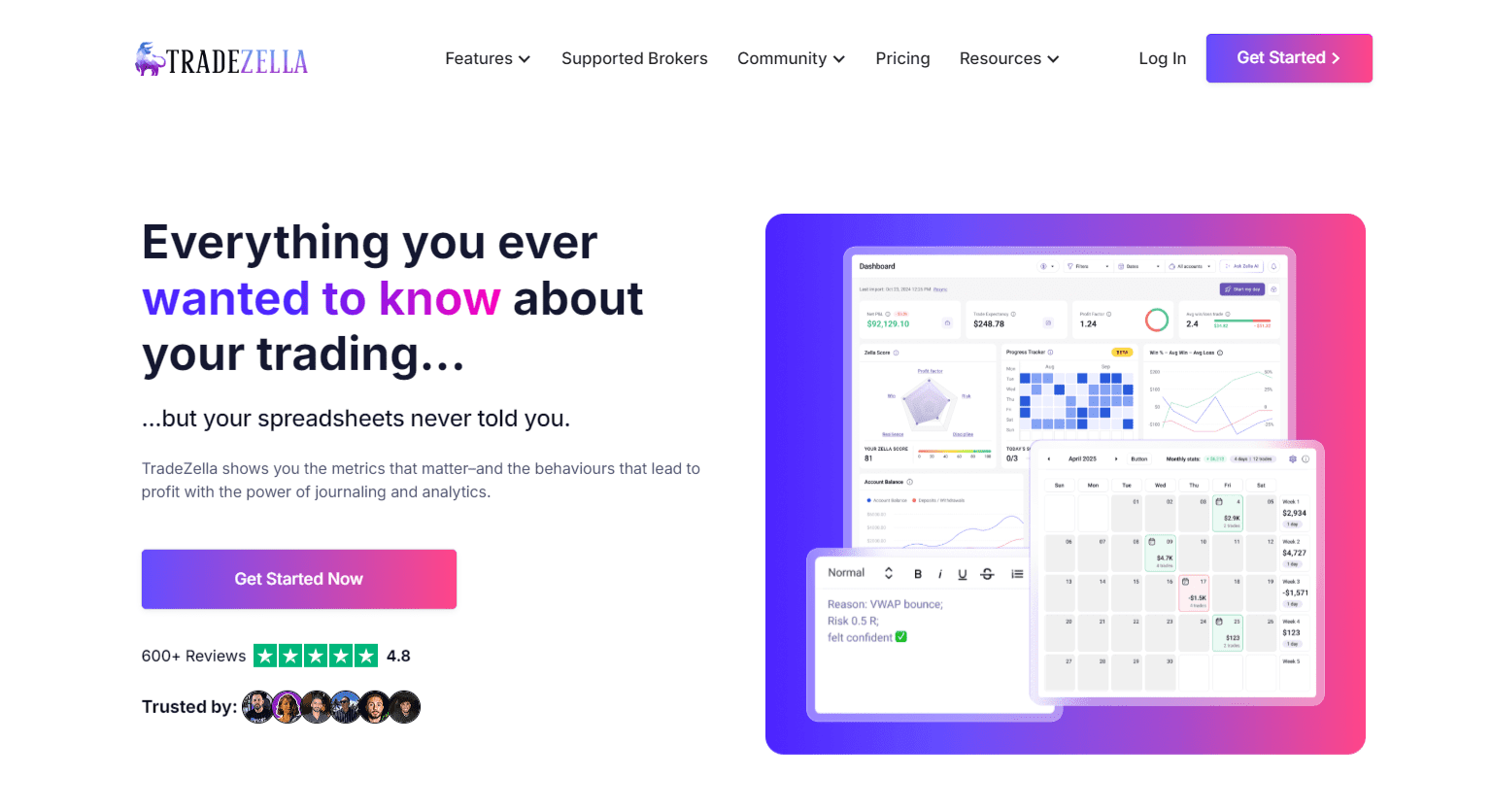
TradeZella is built for traders who want behavior-driven performance insights rather than simple trade logs. The platform focuses heavily on identifying what actually drives profitability, including timing, holding duration, session performance, and emotional patterns.
Its dashboard presents complex metrics in a clean and readable format, making it easier to understand why certain trades work while others fail.
TradeZella stands out for traders thanks to its structured reporting and consistency tracking.
Instead of flooding users with raw numbers, it highlights repeatable behaviors and decision-making trends. Traders who value clarity over clutter will find TradeZella especially effective for refining execution and eliminating costly habits.
2. TraderVue
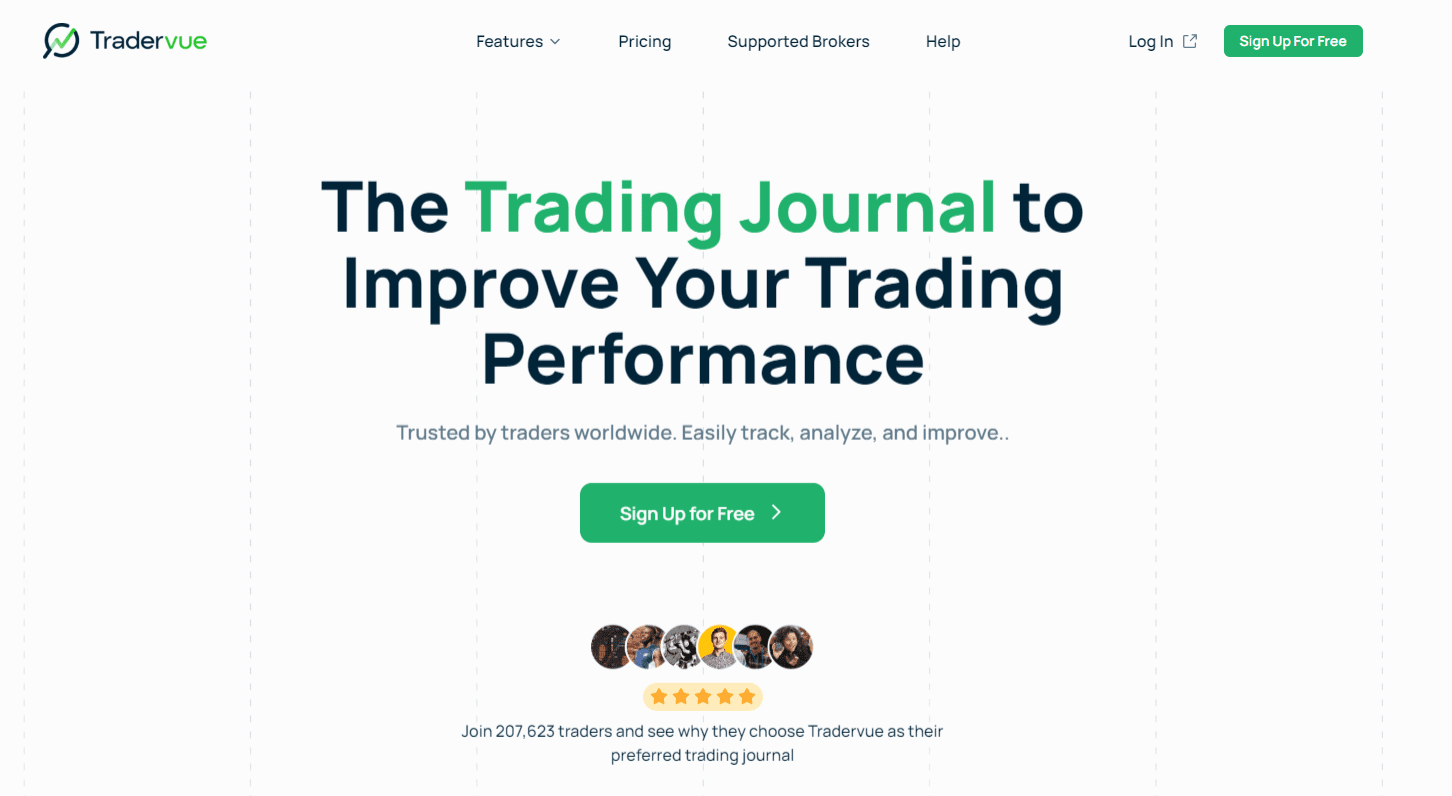
TraderVue focuses on simplicity without sacrificing analytical value. The platform allows traders to log trades quickly while still providing solid reporting on win rate, expectancy, drawdowns, and asset performance.
Its interface feels approachable, making it easier to stay consistent with journaling over time.
One of TraderVue’s strengths is its balance between structure and flexibility. Traders can review performance by symbol, strategy, or time period without navigating complex dashboards.
It works particularly well for discretionary traders who want clear performance feedback without advanced configuration. TraderVue prioritizes usability, which often leads to better long-term adherence.
3. TraderSync
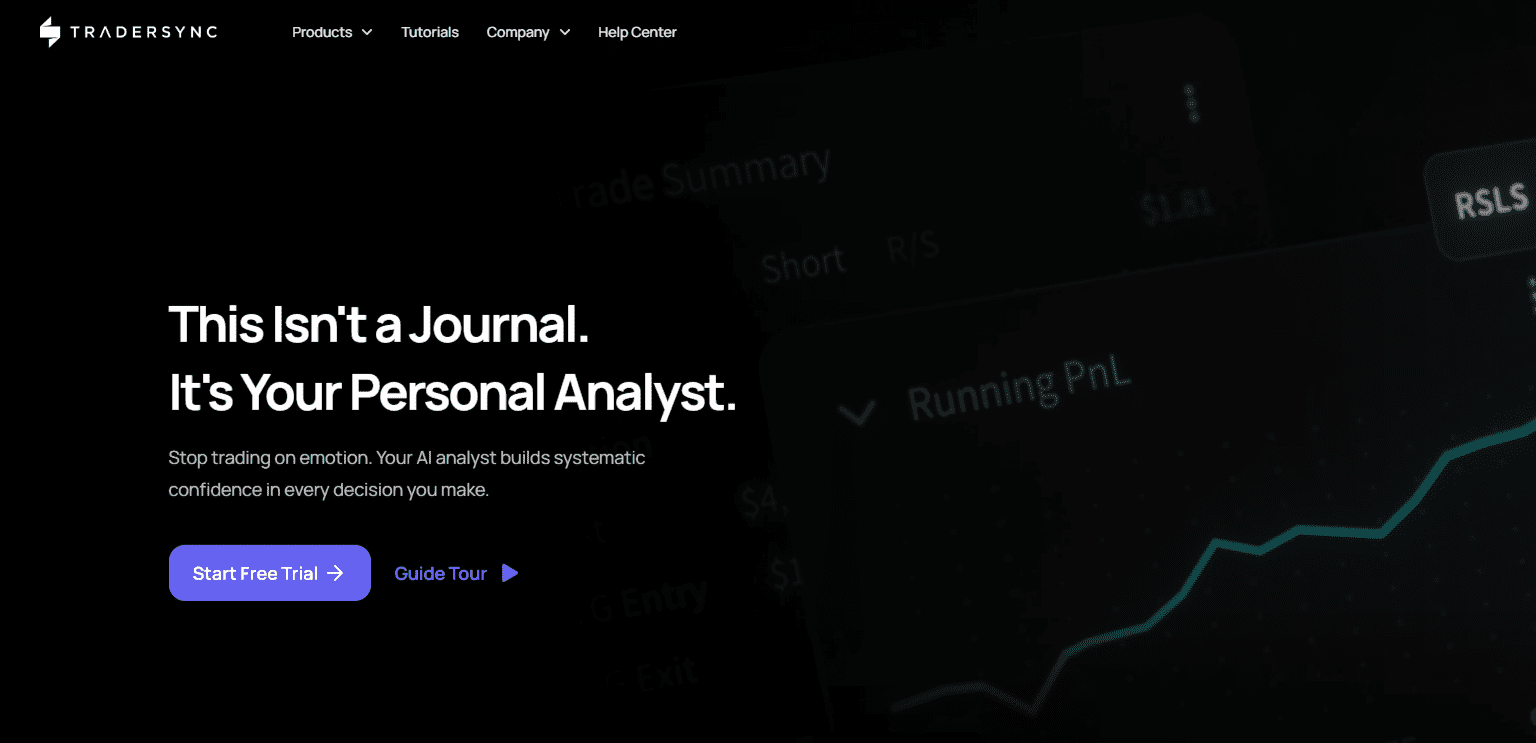
TraderSync is designed for traders who want deep automation and detailed statistics. The platform supports broker syncing, advanced tagging, and rule-based analysis that highlights recurring mistakes and strengths.
It excels at showing how specific behaviors impact profitability over large data sets. TraderSync’s filtering system allows traders to isolate performance by strategy, setup, or mistake category.
This makes it easier to fix problems at the root instead of guessing. The platform does require some learning time, but traders who invest the effort gain high-resolution insights that support systematic improvement and disciplined execution.
4. Trademetria
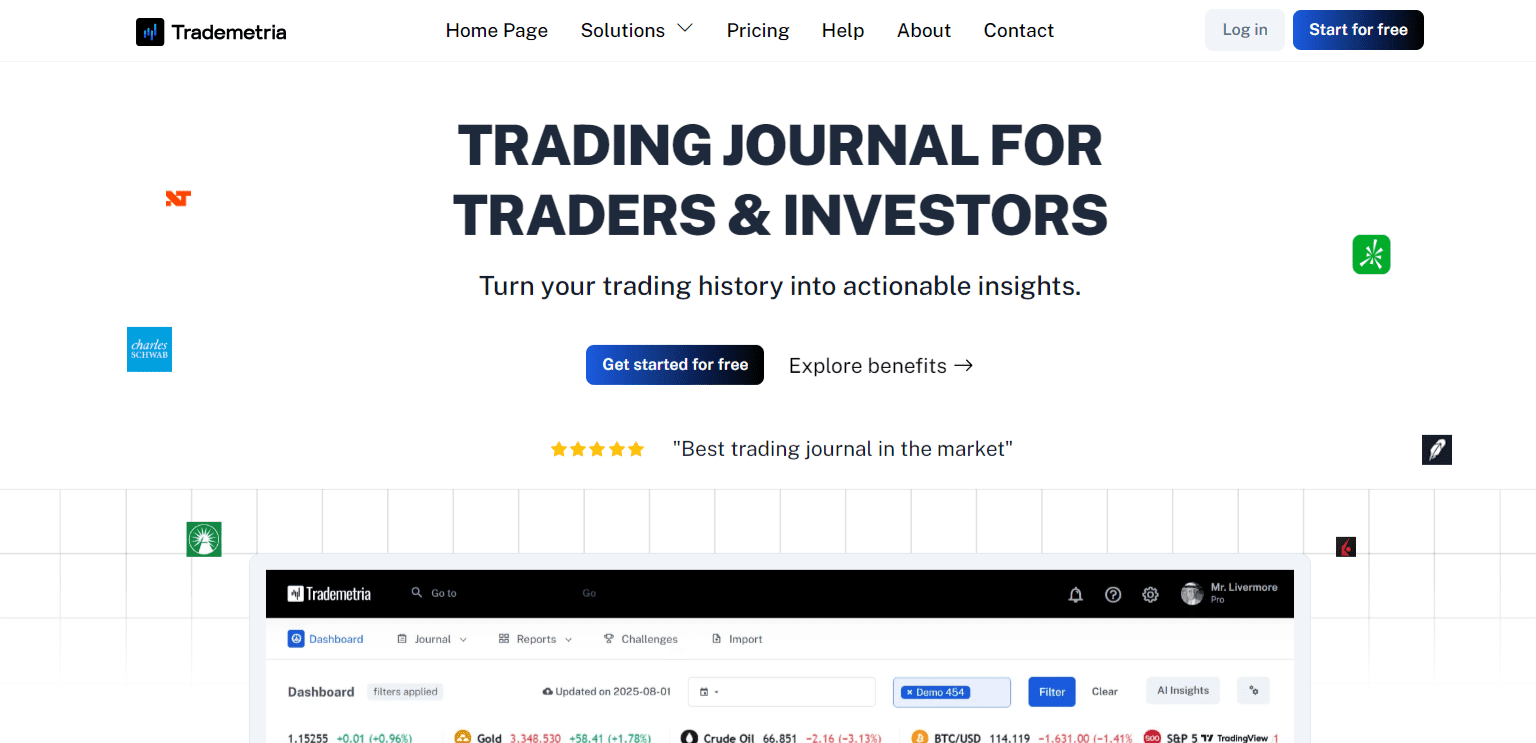
Trademetria places strong emphasis on portfolio-level clarity and risk metrics. It helps traders understand how individual trades affect overall performance rather than viewing trades in isolation.
Equity curves, drawdown tracking, and return consistency are central to its design. The interface is clean and structured, making it suitable for traders managing multiple assets or longer-term strategies.
Trademetria is particularly useful for traders who want to align execution with portfolio objectives and risk constraints.
Its reporting focuses on sustainability, helping users evaluate performance stability rather than short-term gains.
5. TradesViz
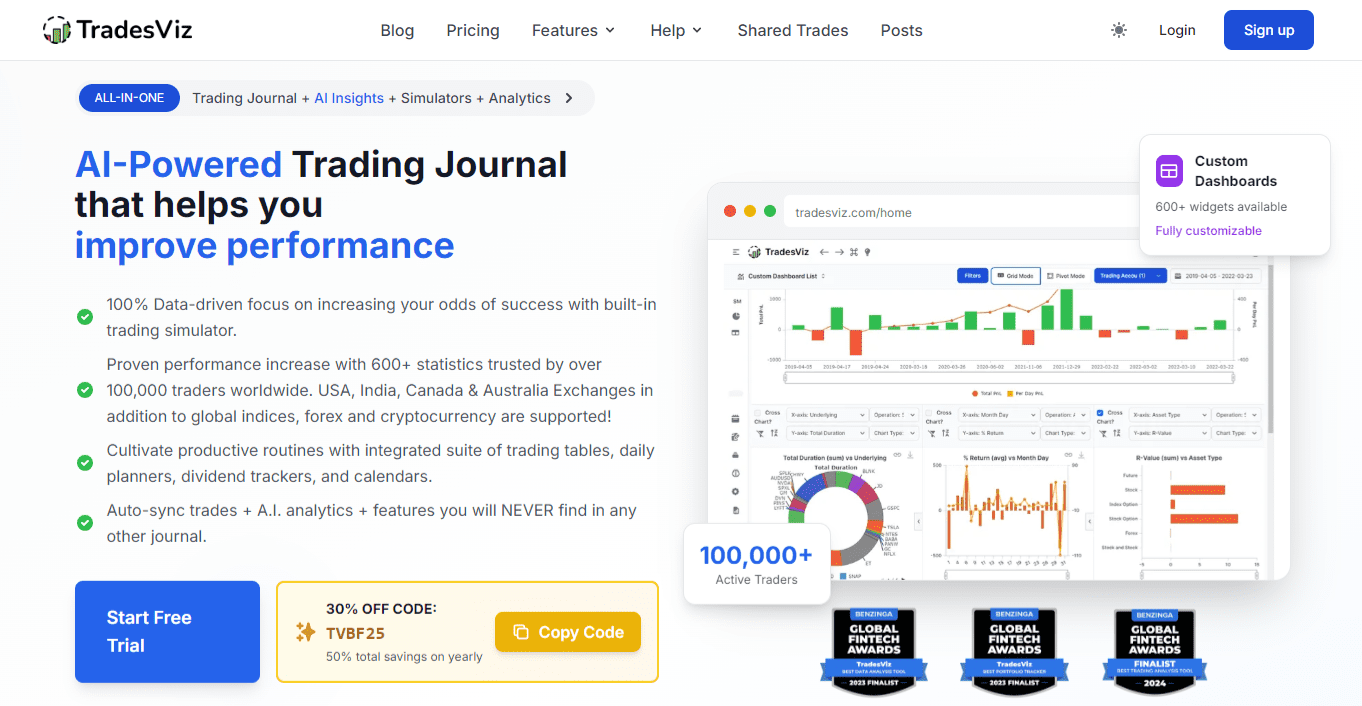
TradesViz is an all-in-one solution that combines journaling, analytics, and simulation. It offers extensive customization through dashboards, widgets, and filters, allowing traders to build views tailored to their specific workflow.
The platform supports a wide range of asset classes and global markets. One of TradesViz’s strongest advantages is its data depth.
With hundreds of metrics available, traders can analyze performance from nearly any angle. This makes it ideal for data-driven traders who want maximum flexibility and control.
The learning curve is higher, but the analytical power is unmatched for traders who rely on detailed statistical feedback.
6. EdgeWonk
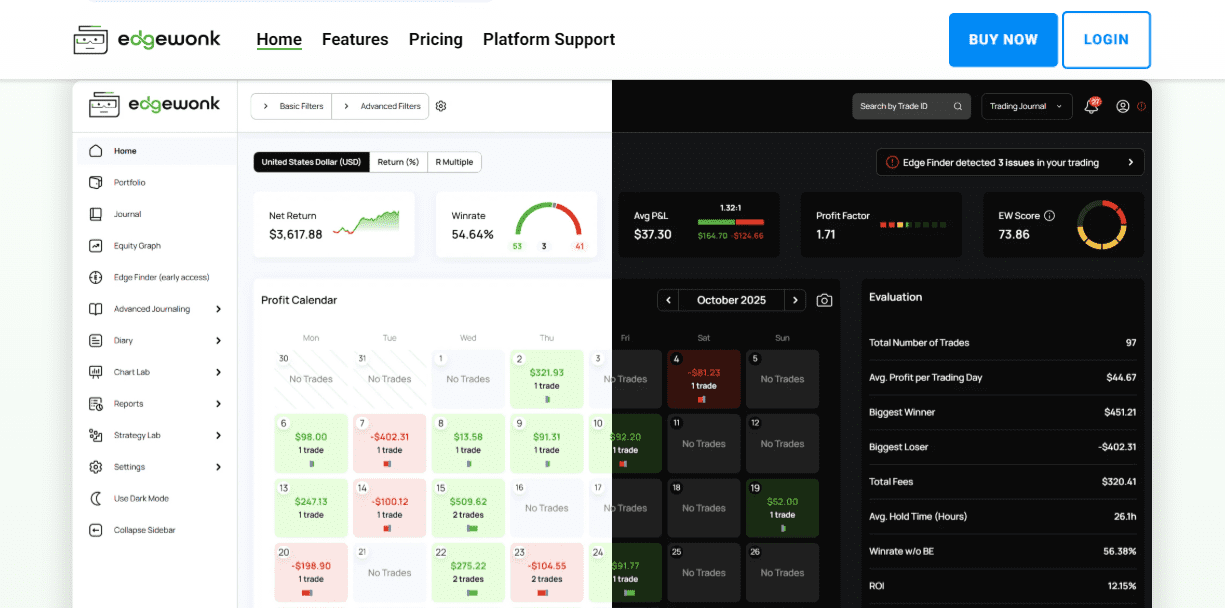
EdgeWonk approaches journaling through a psychology-first lens. Instead of focusing only on outcomes, it analyzes decision quality, emotional state, and behavioral consistency.
The platform identifies patterns that influence performance, such as hesitation, overconfidence, or revenge trading.
EdgeWonk is especially effective for traders focused on long-term development. Its edge analysis tools help users quantify expectancy and decision efficiency rather than relying on intuition.
This platform requires commitment, but traders who engage deeply gain structured insight into their mental game, which often leads to more durable improvements.
7. StonkJournal
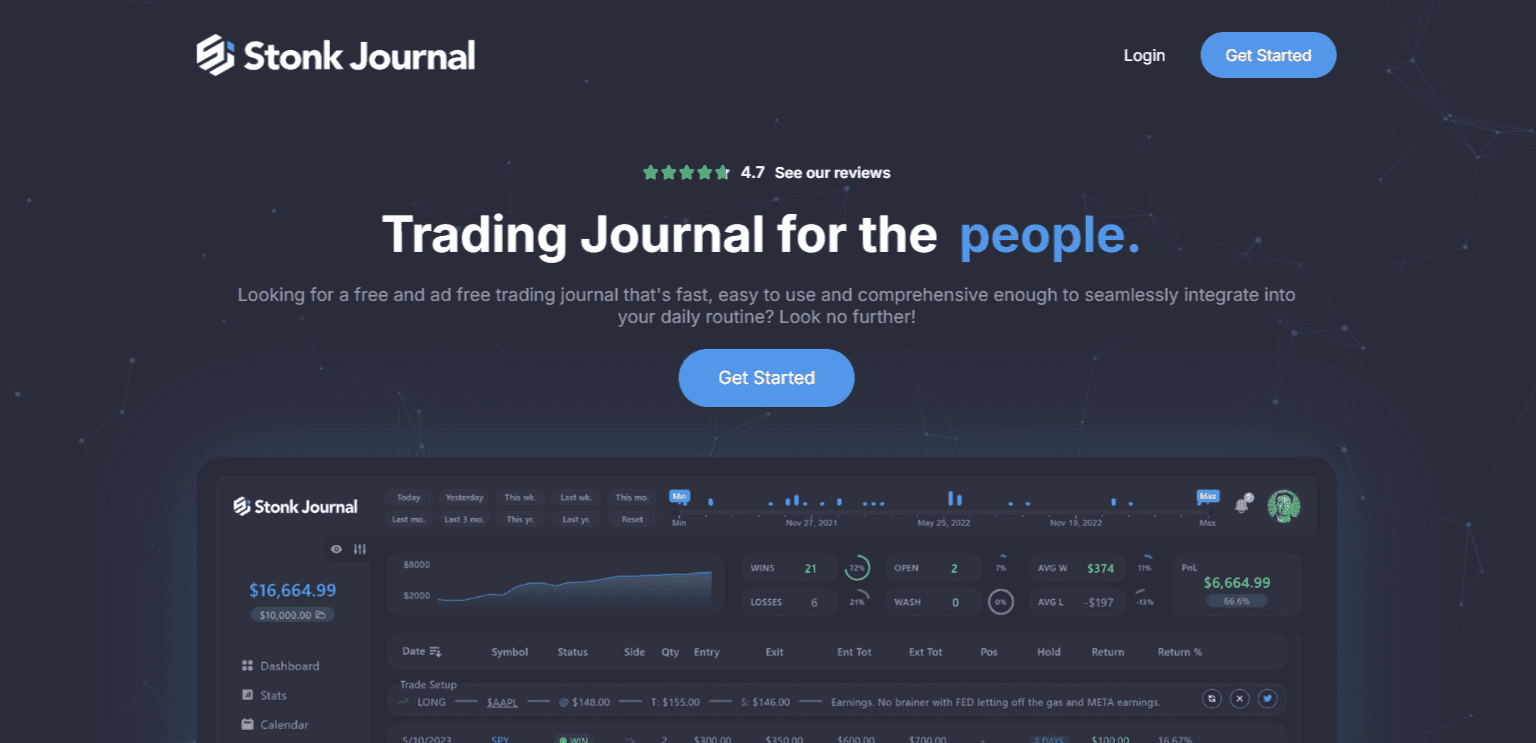
StonkJournal offers a lightweight and accessible journaling experience, making it a strong option for beginners.
The platform focuses on essential trade tracking and basic performance metrics without overwhelming users with advanced features.
Its strength lies in speed and simplicity. Traders can log trades quickly and review core statistics without complex setup.
StonkJournal works well as an entry-level journal or a supplemental tool for casual trading. While it lacks advanced analytics, it lowers the barrier to journaling and helps traders build consistent review habits early on.
Key Factors to Consider When Choosing a Trading Journal
Selecting the right journal depends on how closely the tool aligns with your trading process and review habits.
Trade data accuracy and automation determine how reliable your insights will be. Journals that sync directly with brokers reduce manual errors and save time.
Analytics depth versus usability matters more than feature count. Clear insights outperform complex dashboards that never get used.
Behavioral tracking helps identify emotional and decision-based leaks that pure statistics cannot show.
Asset and broker compatibility ensures the journal fits your trading universe.
Scalability becomes important as trade volume and strategy complexity increase.
How Trading Journals Actually Improve Performance
A trading journal works as a feedback system that replaces guesswork with evidence. By reviewing objective data, traders identify which setups produce consistent returns and which behaviors destroy expectancy.
Journals highlight patterns across time, sessions, and market conditions, allowing traders to adjust execution rules with confidence.
Over time, this process builds discipline. Decisions become rule-based instead of emotional. Risk becomes consistent instead of reactive.
The result is not just higher returns, but greater confidence and control. Traders who journal effectively stop reacting to individual outcomes and start managing performance as a system.
Frequently Asked Questions
What Is the Best Trading Journal for 2026?
There is no single best option for every trader. Platforms like TradeZella and TraderSync suit advanced traders, while TraderVue and StonkJournal work better for simplicity-focused users.
Are Paid Trading Journals Worth It?
Paid journals provide deeper analytics, automation, and behavioral insights. Traders who review performance seriously often recover the cost through improved consistency.
Can Trading Journals Improve Trading Discipline?
Yes. Journals expose repeated mistakes and emotional patterns, making it easier to follow rules and manage risk objectively.
Which Trading Journal Is Best for Beginners?
StonkJournal and TraderVue are strong starting points. Their simplicity helps beginners build consistent journaling habits without technical overload.
Conclusion
The real value of a trading journal is not documentation. It is transformation. The best trading journals for 2026 help traders see their behavior clearly, measure what matters, and make deliberate improvements.
TradeZella, TraderVue, TraderSync, Trademetria, TradesViz, EdgeWonk, and StonkJournal each serve different trading styles and experience levels, but all aim to turn data into better decisions.
The strongest results come when journaling becomes part of the trading process, not an afterthought. Improvement follows clarity, and clarity begins with the right journal.