


Eightcap operates as a global CFD broker that gives retail traders direct access to forex, indices, commodities, shares, and cryptocurrencies.
Founded in 2009 in Australia, the company built its reputation around regulation, competitive pricing, and strong platform infrastructure rather than flashy marketing promises.
This review looks at how Eightcap performs as a broker, not as a challenge provider.
Where Eightcap Stands in the Market
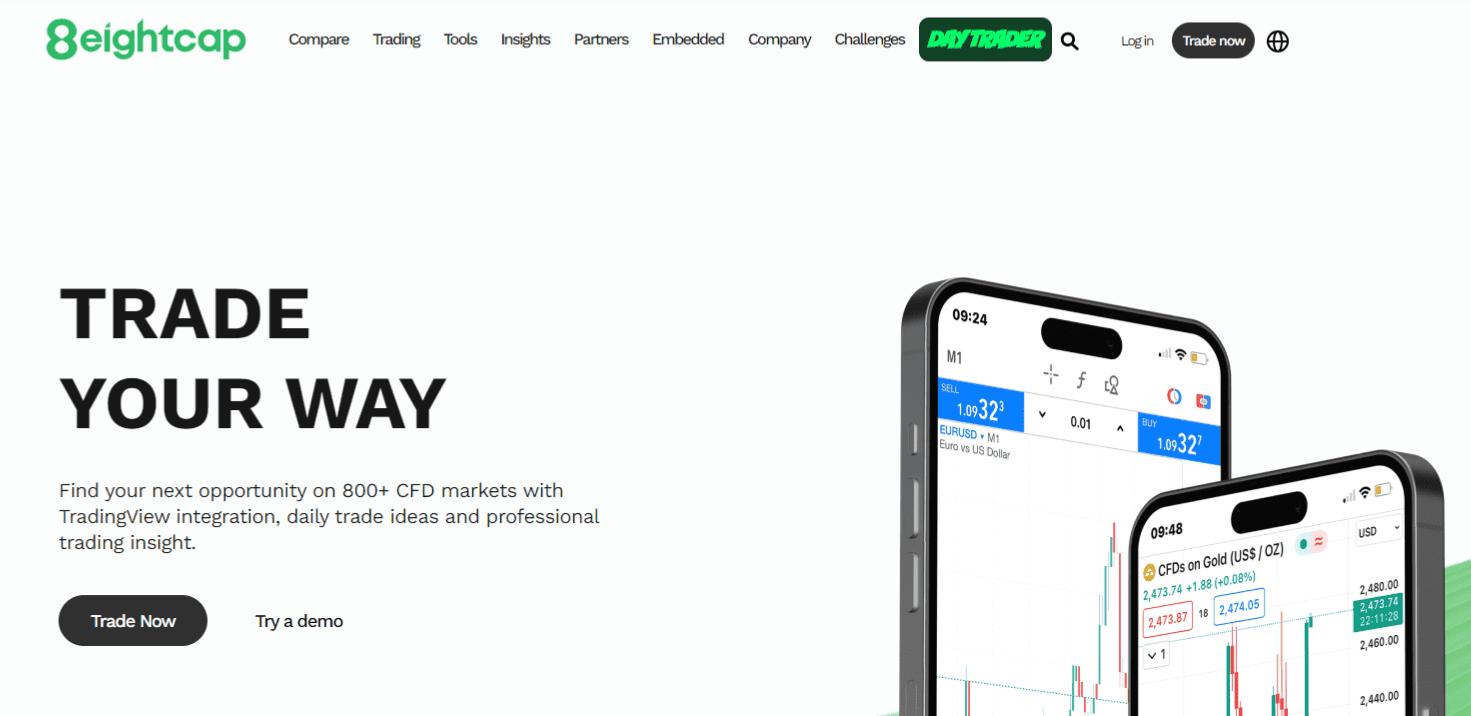
Eightcap does not position itself as a beginner-focused brokerage with heavy educational branding.
Instead, it targets active traders who already understand spreads, commissions, and leverage mechanics.
The broker operates under several regulated entities, including oversight from:
- ASIC in Australia
- FCA in the United Kingdom
- CySEC in Europe
- SCB in The Bahamas
This matters because regulation defines leverage caps, negative balance protection, and dispute resolution rights.
For example, a retail trader under FCA regulation will face lower leverage limits than someone trading under an offshore entity.
That changes both opportunity and risk exposure.
Account Setup and First Deposit

Opening an account with Eightcap typically requires:
- Identity verification
- Proof of address
- Basic financial suitability questions
The minimum deposit generally starts at $100, which makes the platform accessible without large capital commitment.
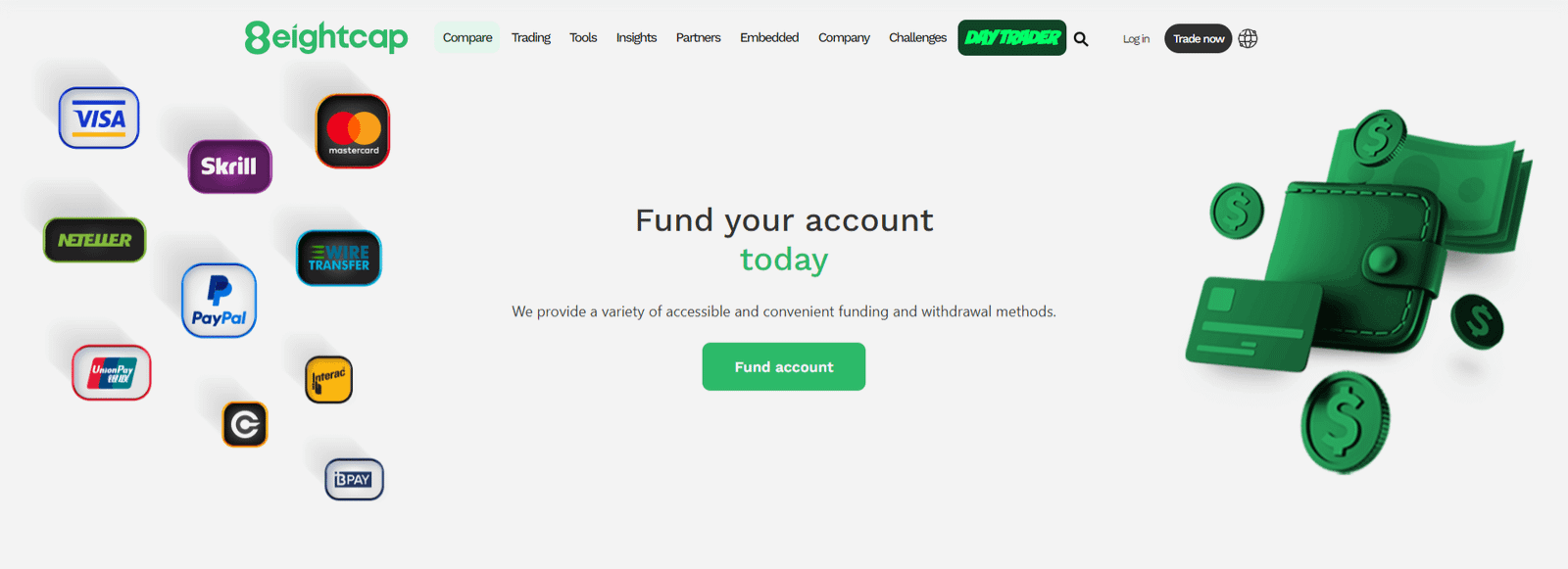
Once approved, traders can fund accounts through multiple methods, depending on region. Processing times vary by method, but most deposits reflect quickly.
Before depositing larger amounts, many traders test platform speed and withdrawal flow with smaller transactions.
That approach reduces unnecessary exposure.
Pricing Structure: Spread vs Commission
Eightcap offers two main account models.
Standard Account
- No commission
- Spread-inclusive pricing
This account suits traders who prefer simple cost calculation. You see the spread, and that represents your trading cost.
Example:
If EUR/USD shows 1.0 pip spread, that pip difference covers broker compensation.
Raw Account
- Very tight spreads
- Commission charged per lot
This account appeals to scalpers and high-volume traders.
For example:
Instead of paying 1.0 pip spread, you may see 0.1 pip spread and pay a fixed commission per lot. Over many trades, this structure can reduce total cost.
Choosing between the two depends on trading frequency and position size.
Execution and Liquidity Model
Eightcap uses a straight-through processing model. Orders route to liquidity providers rather than internal dealing desks.
Execution speed plays a major role for:
- Scalpers
- News traders
- Algorithmic traders
During high-impact economic events, spreads can widen.
That behavior happens across most brokers. The key difference lies in how quickly execution adjusts to market conditions.
For example, during a U.S. interest rate decision, price can move sharply within seconds. If execution delays even briefly, slippage can occur.
Traders should test live conditions before increasing lot size.
Trading Platforms: Practical Experience
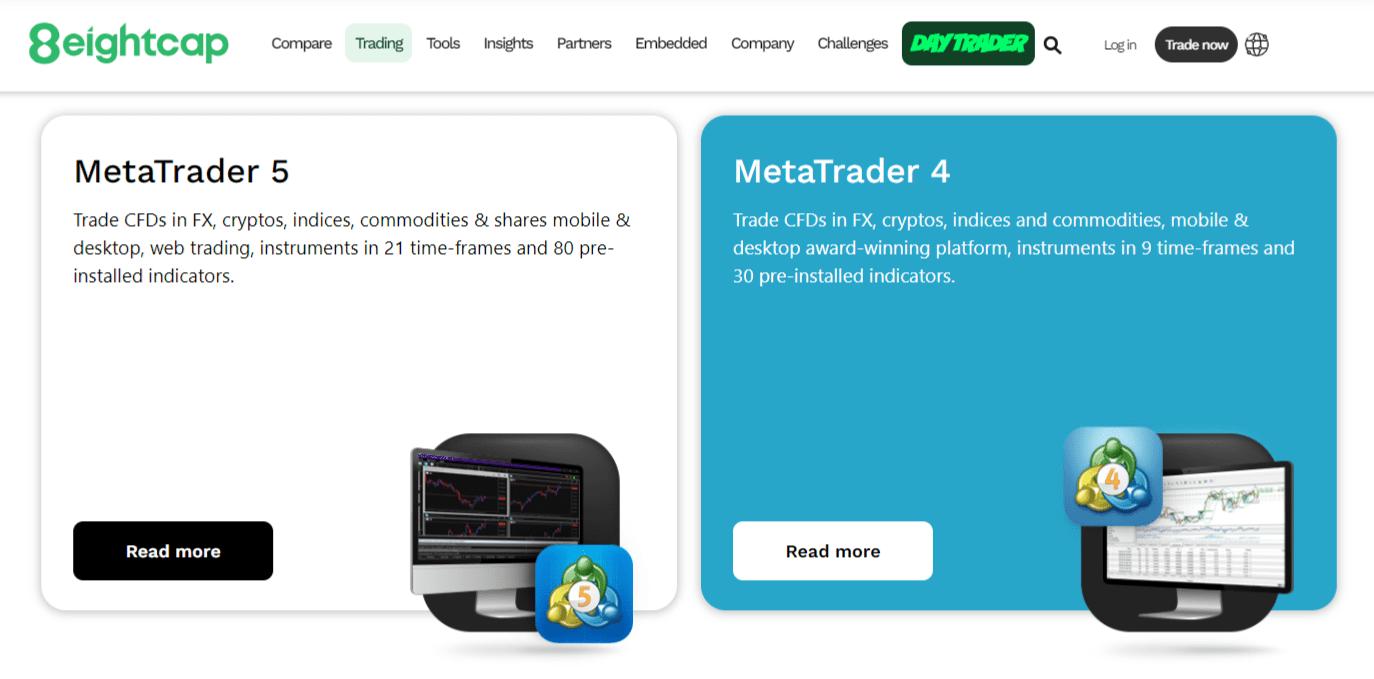
Eightcap supports:
- MetaTrader 4
- MetaTrader 5
- TradingView integration
MT4 and MT5 remain industry standards. They support custom indicators, expert advisors, and manual strategies.
TradingView integration gives an advantage to traders who rely heavily on advanced charting.
Instead of switching between analysis and execution platforms, traders can place trades directly from TradingView charts.
That integration appeals strongly to technical analysts.
Leverage: Controlled by Jurisdiction
Leverage varies depending on regulatory entity. Retail traders in strict jurisdictions may see limits such as:
- 1:30 for major forex pairs
- Lower leverage for certain CFDs
Under offshore or professional classification, leverage can reach significantly higher levels.
Here is a practical example:
With 1:30 leverage, a $1,000 deposit controls $30,000 exposure.
With 1:500 leverage, the same deposit controls $500,000 exposure.
The second scenario offers higher upside but dramatically increases liquidation risk. Eightcap allows flexibility, but traders must choose wisely.
Market Coverage and Asset Variety
Eightcap provides access to more than 800 CFDs. These include:
- Major and minor forex pairs
- Commodities like gold and oil
- Global indices
- Individual stock CFDs
- Cryptocurrency CFDs
This range supports multi-asset strategies.
For example, a trader can hedge equity exposure by opening gold positions during high inflation periods. Or combine forex scalping with crypto swing trades.
Not every broker offers that level of diversity.
Crypto Offering
Eightcap stands out for its crypto CFD selection.
Unlike brokers that limit crypto exposure to a few pairs, Eightcap offers a wider range of cryptocurrency CFDs.
This benefits traders who want to speculate on digital asset volatility without opening a separate crypto exchange account. However, crypto markets move rapidly.
Traders must understand overnight fees and volatility risk.
Risk Protection and Client Safeguards
Under regulated entities, Eightcap provides:
- Segregated client funds
- Compliance oversight
- Standard dispute resolution channels
Retail traders in regulated regions often receive negative balance protection. That protection prevents account balance from dropping below zero.
Under offshore entities, protections may differ. Traders should confirm account classification before deposit.
Who Should Consider Eightcap

Eightcap suits traders who:
- Already understand leveraged CFD trading
- Prefer MT4, MT5, or TradingView
- Value regulatory backing
- Want flexible leverage options
- Trade multiple asset classes
It may not suit traders who:
- Need deep educational guidance
- Prefer very low leverage only
- Require U.S. regulation access
Frequently Asked Questions
Does Eightcap Charge Inactivity Fees?
Inactivity policies depend on the regulatory entity under which your account operates. Some brokers apply a fee after several months without trading activity.
Traders should review the client agreement linked to their specific entity to confirm whether inactivity charges apply and after what timeframe.
Can I Hedge Positions On Eightcap?
Hedging availability depends on account type and jurisdiction. In many regions, Eightcap allows traders to open opposite positions on the same instrument.
However, regulatory rules in certain areas may restrict this practice. Always confirm hedging permissions before structuring multi-directional strategies.
Are There Limits On Scalping Strategies?
Eightcap generally supports scalping since it provides tight spreads and STP execution. However, extreme latency arbitrage or abusive trading behavior may violate terms.
Traders who rely on high-frequency setups should test execution conditions and review platform rules carefully.
What Happens If Market Volatility Causes Negative Balance?
For retail clients under regulated entities, negative balance protection often applies, which prevents the account from falling below zero.
Under offshore entities, protection policies may differ. Traders should confirm account classification to understand liability in extreme market conditions.
Conclusion
Eightcap positions itself as a serious multi-asset CFD broker rather than a marketing-driven platform.
Its strength lies in regulatory coverage, competitive raw spreads, and strong platform support, including TradingView integration.
The broker offers flexibility in leverage and asset variety, but traders must understand how jurisdiction affects protection and exposure.
For disciplined traders who value infrastructure and execution quality over promotional gimmicks, Eightcap delivers a stable and competitive trading environment.
As always, trading success depends less on the broker and more on consistent risk management and structured decision-making.