

Numbers tell part of the story, but they do not always explain why trades go wrong or right. Traders who move away from Trademetria are often not chasing more data.
They want clarity, speed, and insights they can actually act on after a session ends. Some want visuals, some want psychology, and some want a journal that fits how they think.
This article looks at alternatives traders use when pure statistics stop being enough to drive real improvement.
5 Trademetria Alternatives
If Trademetria feels too number-heavy or detached from day-to-day decision-making, these platforms take different approaches to journaling and analysis.
Each one helps traders understand performance from a more practical, usable angle.
1. TradeZella
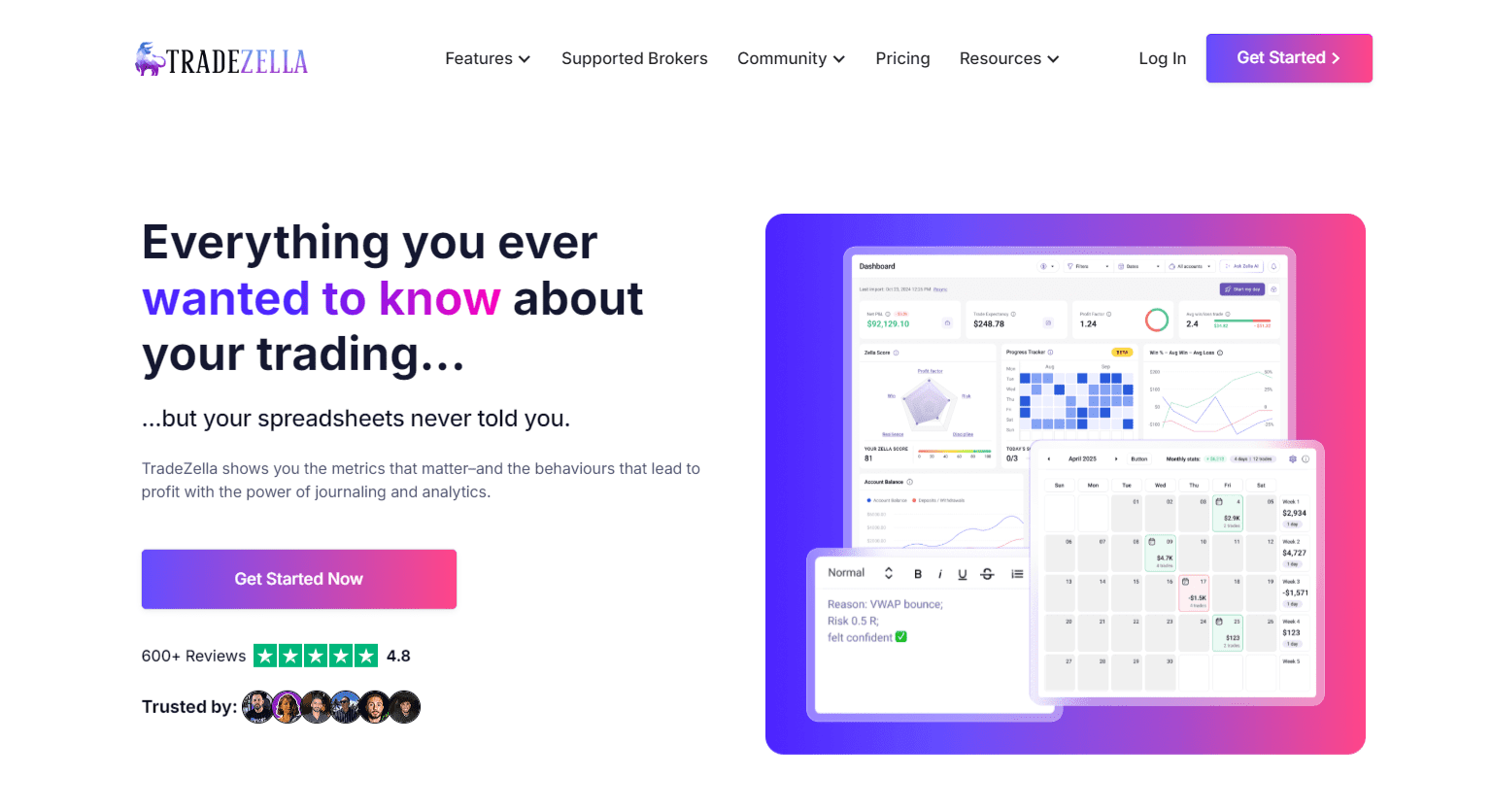
TradeZella is built around speed and clarity rather than deep manual analysis.
Trades are imported automatically from supported brokers, then organized into visual dashboards that highlight expectancy, consistency, and behavioral mistakes.
What makes TradeZella stand out is how quickly it answers practical questions like where money is actually being made and which habits are quietly hurting performance.
Instead of digging through tables, traders see session-based results, rule violations, and execution errors almost immediately. This makes reviews shorter but more focused.
Many traders who move away from purely statistical tools prefer TradeZella because it bridges the gap between numbers and behavior, helping them adjust execution without overanalyzing every metric.
2. TraderVue
TraderVue appeals to traders who want structure and depth in their reviews.
It allows extensive tagging, filtering, and segmentation of trades by setup, market condition, position type, and timing.
Over time, this builds a detailed performance database that reveals patterns not visible in basic statistics alone.
TraderVue shines when traders are willing to invest effort upfront to gain long-term clarity.
It supports screenshots, notes, and custom fields, which helps contextualize decisions beyond entry and exit prices.
Traders who prefer methodical improvement often choose TraderVue because it supports slow refinement and disciplined analysis rather than quick summaries or surface-level insights.
3. TraderSync
TraderSync combines automated trade importing with flexible journaling and review tools.
It supports detailed tagging, mistake tracking, and performance breakdowns across time, setups, and instruments.
One of its strengths is how it connects execution mistakes to performance outcomes, making it easier to see recurring issues like overtrading or poor exits.
TraderSync also includes replay-style visuals and calendar views that help traders review activity in context.
Traders who choose it often want a balance between statistics and narrative. It provides enough depth to analyze performance seriously without fully committing to a numbers-only or psychology-only approach.
4. TradesViz
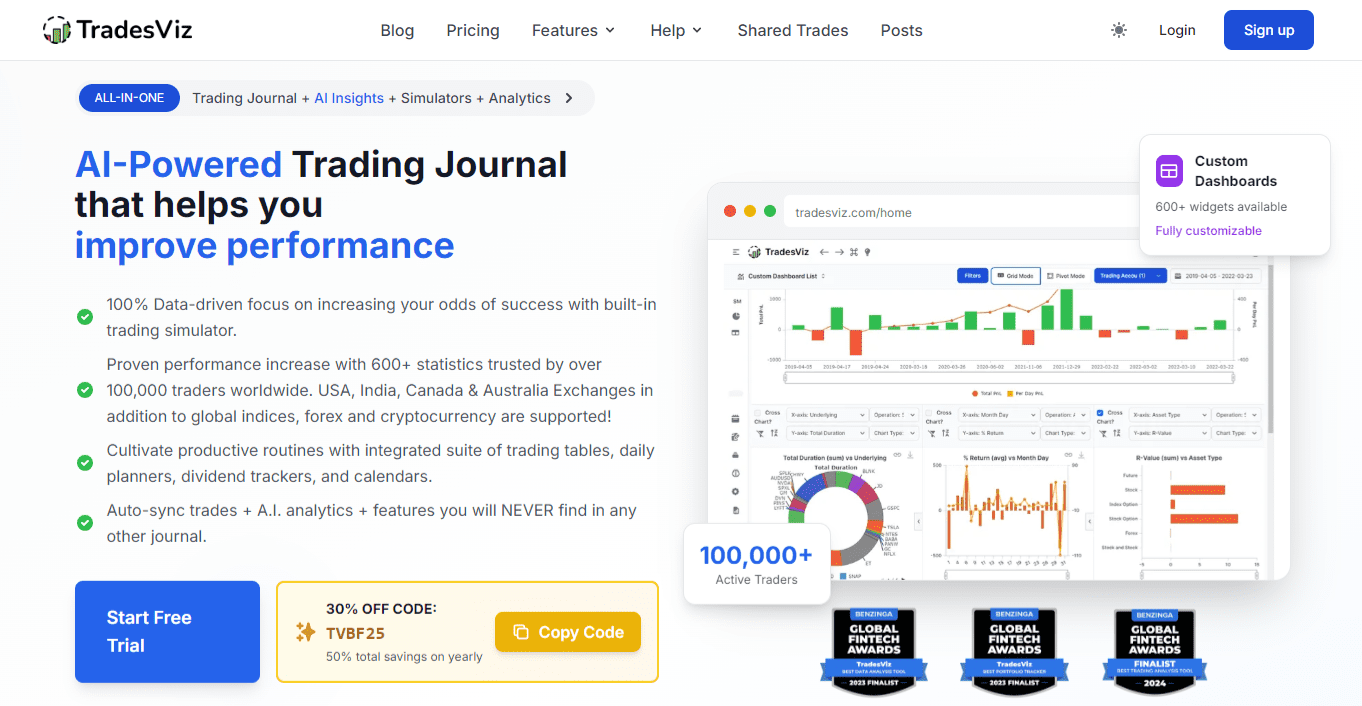
TradesViz offers one of the most customizable journaling environments available.
Traders can design dashboards, define advanced tags, and analyze performance across many dimensions.
This flexibility makes it popular with traders who operate across multiple markets or strategies and want one journal to handle everything.
TradesViz allows users to shape the platform around their workflow instead of adapting to fixed templates.
The trade-off is complexity, but for traders willing to spend time configuring it, the payoff is highly tailored insight.
Many traders leave more rigid tools for TradesViz when they want full control over how performance is measured and displayed.
5. StonkJournal
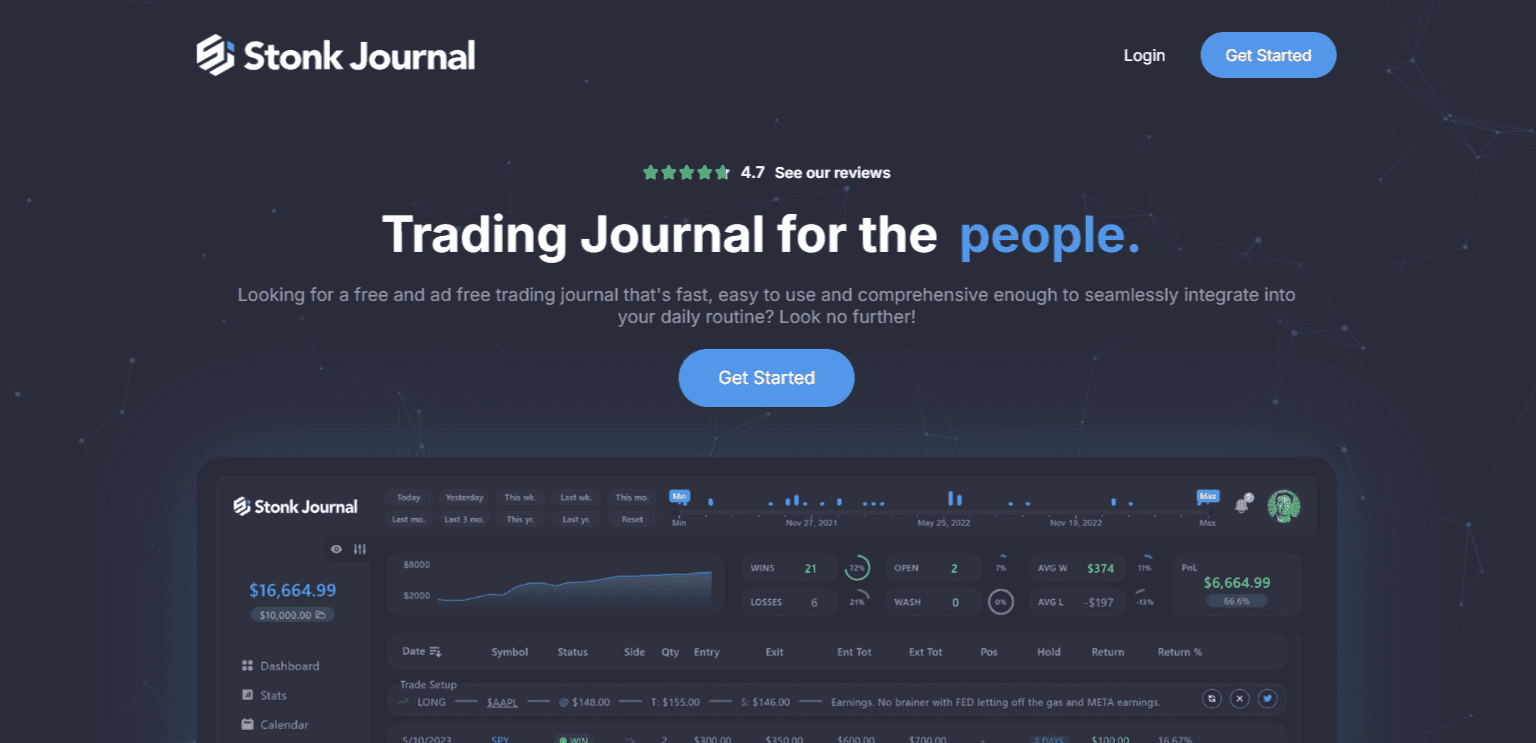
StonkJournal takes a simpler, more focused approach to journaling.
It emphasizes clean trade logs, clear notes, and straightforward performance summaries rather than deep analytics.
This makes it appealing to traders who feel overwhelmed by dense dashboards and excessive metrics.
StonkJournal works best as a daily reflection tool, helping traders document decisions, emotions, and lessons while keeping review sessions light.
While it does not offer advanced statistical modeling, it encourages consistency and honest self-review.
Traders often choose StonkJournal when they want journaling to support discipline and awareness without turning into a technical analysis project.
Frequently Asked Questions
Should Journaling Focus More on Profits or on Decision Quality?
Decision quality matters more in the long run. Profits can be influenced by market conditions, but good decisions repeat across environments. Journaling helps identify whether trades followed rules, managed risk properly, and aligned with your plan, which ultimately leads to more stable performance.
How Detailed Should Trade Notes Be to Stay Useful?
Notes should be specific but short. A few lines explaining the reason for entry, exit logic, and emotional state are usually enough. Overly long notes often go unread later and slow down the review process rather than improve it.
Is It Better to Review Trades Immediately or Wait Until the Session Ends?
Both have value. Quick notes right after a trade capture emotion and reasoning, while end-of-session reviews provide perspective. Many traders jot down brief comments during trading and do a structured review once the session is finished.
Can Journaling Help Even If I Trade Different Strategies?
Yes. Journaling reveals which strategies match your strengths and which create stress or inconsistency. Over time, patterns emerge that help you focus on what works best for your personality and decision-making style, not just what looks good on paper.
Conclusion
Trademetria is strong for traders who live in the numbers, but not everyone improves that way.
Some traders need clearer visuals, others need better context, and some need a journal they will actually use every day.
The best alternative is the one that turns review into action instead of information overload.
When your journal helps you spot mistakes quickly and adjust behavior, progress becomes much easier to maintain.